There was reason to suspect that 2010’s Little Fockers, the second sequel to the series that began at the turn of the century with Meet the Parents, was simply a major miscalculation from all involved. After all, the series had put out two, pretty funny comedies within the decade before it, and many of the same people—as well as a few new faces—were involved. Now, we have Focker In-Law (there’s definitely a punctuation problem with this title), which nearly proves those suspicions to have been correct.
That is primarily because the film introduces a new character played by Ariana Grande-Butera, already a proven natural comedienne, and positioned within the screenplay as sort of a reverse mirror of the one played all those years ago by Ben Stiller. In that original film, of course, Stiller was Gaylord “Greg” Focker, trying to impress his potential father-in-law in spite of their categorically opposite personalities and lifestyles, and the comic tension of the movie was in the fun casting of Stiller opposite Robert De Niro. It worked quite, quite well, and in its best moments, so does this third (but, if the final line of dialogue pans out, certainly not last) film in the franchise.
This time, Greg is sort of in the same position as De Niro’s Jack Byrnes was in the original movie, as his own son Henry (Skyler Gisondo) is set to propose to his girlfriend, whom no one in the family has met yet. In one of a pair of massive coincidences that drive this plot, Greg has an unfortunate sort of run-in with Grande-Butera’s Olivia Jones on the flight to San Diego, where the big family hubbub is to take place. The unfortunate part of it is that it involves an elaborate misunderstanding over some spilled alcohol, a tab of birth control pills, and a pair of flight attendants who are militant about the use of the “proper” cabin’s bathroom.
Joke scenarios like these are the norm for this series, which mixes broad slapstick and wry sincerity to mostly successful (except, again, for that previous movie, which did nothing right), but they’re pretty funny here, too, thanks to the cast and to writer/director John Hamburg’s commitment to going as far with the jokes as he can within a PG-13 frame. Most of the jokes once again surround the pairing of the neurotic Greg with a more stoic screen partner, and Grande-Butera reciprocates generously in a very funny performance as Olivia. The joke of this character is that she’s not at all what one expects of her—a past career in hostage negotiation for the FBI, for instance, which obviously pairs nicely with Jack’s tenure in the CIA (this means a return of the lie detector test in a scene that’s as funny as it is smartly written).
The other joke is that, faced with the idea of his son making a huge decision about and with someone with whom Greg has only had that one unfortunate experience, Greg becomes psychotically determined, not necessarily to undermine the entire relationship, but certainly to find some fatal flaw within it by proving to everyone—but mostly himself—that Henry and Olivia are not ready or right for each other. Indeed, the film goes down the easiest route to do this, which is to pit Greg and Olivia against each other in a series of psychological battles of wit. These, though, become fairly repetitive and silly in a way that slightly undermines the way the movie occasionally tries to engage the sincerity of Henry and Olivia’s relationship (which, because of the pair of actors, is quite sweet).
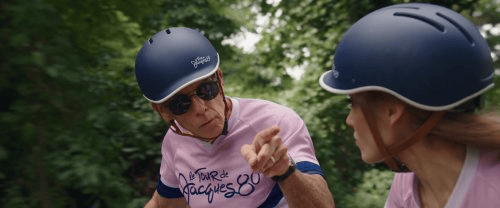
Once the scheming starts, the earlier good will of the film is replaced by the realization that this movie is going to make Greg both kind of an idiot and also a malicious one: He turns a casual family bike ride into an impromptu race with Olivia that becomes a disaster all of his making. His insistence upon cooking dinner for his father-in-law that no longer comports with Jack’s diet also becomes a competition, because Olivia is an incredibly skilled chef. The biggest one is a scheme involving an heirloom wedding ring, a dog trained to detect scent, and a dead cat’s taxidermied husk that keeps building upon itself—and intrudes upon a potentially potent moment between the two characters in the process.
That the movie almost gets over itself (in spite of the inane return of Owen Wilson as the dead-end character of Pam’s ex and that other massive, plot-defining convenience) in order to make something work here is pretty much entirely up to the refreshed sense of comic verve coming from Stiller, De Niro and especially Grande-Butera. Focker In-Law simply goes a few too many steps too far in trying to prove that this series still has the goods, to the detriment of a solid idea for its first entry in more than 15 years.
Rating: **½ (out of ****)


Leave a Reply